Treatment
Porcelain veneers
Thin porcelain, bonded to the front of a tooth. Reversible only in the sense that nothing is.
What it is
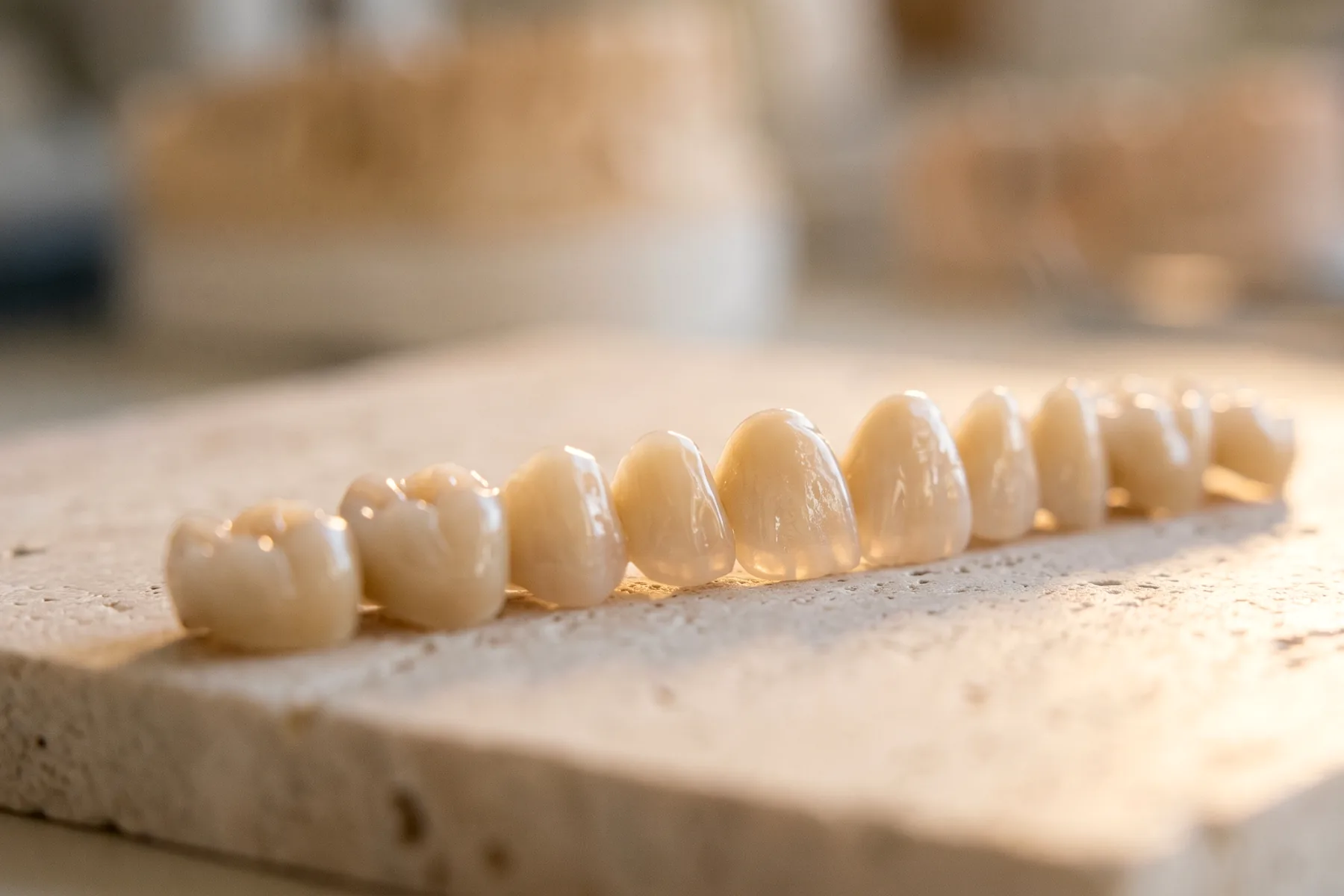
A veneer is a facing, around half a millimetre thick, bonded to the front surface of a tooth. It changes shape, colour and alignment in a way that whitening and bonding cannot, and it does it without moving the tooth.
It also involves removing a little enamel, and enamel does not come back. That is the honest cost of the treatment and the reason we talk people out of veneers more often than into them. If the problem is colour alone, whitening takes nothing away and is the better answer.
Where veneers are the right answer, the work is mostly in the design. We build the proposed shape in wax first, fit it in your mouth as a temporary, and let you live with it for a fortnight before anything is made in porcelain.
Suited to
- Teeth that are the wrong shape or size rather than the wrong colour
- Chips and worn edges on front teeth
- Small gaps that do not warrant alignment
- Old bonding that keeps staining at the margins
And when it is not
If your teeth are significantly out of line, alignment first and veneers second is almost always the better plan — it removes far less enamel and lasts longer. A clinician who offers you eight veneers to fix crowding is selling, not treating.
Step by step
How it goes.
Design
Photographs, a scan, and a wax model of the proposed shape.
Trial
The design is fitted as a temporary. You wear it for two weeks and tell us what is wrong with it.
Preparation
Minimal enamel reduction, a final scan, and temporaries while the porcelain is made.
Fit
Tried in with a water-based paste before anything is bonded, so the last chance to change your mind is a real one.